People say “storage” and “self-storage” as if they mean the same thing. They don’t, and picking the wrong one can cost you money or leave you driving to a unit every week. At our Romsey warehouse we run both, so we’re not selling you on one over the other. We can tell you, plainly, which suits which situation.
The short version: if you’re storing a houseful between completions and won’t need to dip in, containerised storage is usually cheaper and safer. If you want your own unit you can visit whenever you like, self-storage wins. This guide walks through the difference, with figures from our own facility.
Key Takeaways
- Containerised (managed) storage loads your goods into sealed wooden containers, inventoried and stacked in our secure warehouse. You don’t access them day to day.
- Self-storage gives you your own unit with your own padlock, which you can visit during opening hours as often as you like.
- Containerised is typically the better value for longer stays and the safest for furniture; self-storage suits frequent access and live stock.
- The UK has 2,900+ self-storage sites, of which 1,100+ offer container storage (SSA UK, 2024), so both models are mainstream and widely used.
- For most house moves with a completion gap, containerised warehouse storage is the default we recommend.
What’s the difference between storage and self-storage?
The difference comes down to access and packaging. Containerised storage means we load your belongings into sealed containers, log every item, and store them in our warehouse, where staff retrieve them when you need them. Self-storage means you rent a unit, hold the only key, and come and go yourself. One is managed for you; the other you manage.
That single distinction drives almost everything else: cost, security, how furniture is protected, and how often you can get to your things. Neither is “better” in the abstract. The right one depends on what you’re storing and whether you’ll need to reach it.
For the wider picture of when storage helps a move at all, see our guide to the benefits of storage during a move.
How does containerised (managed) storage work?
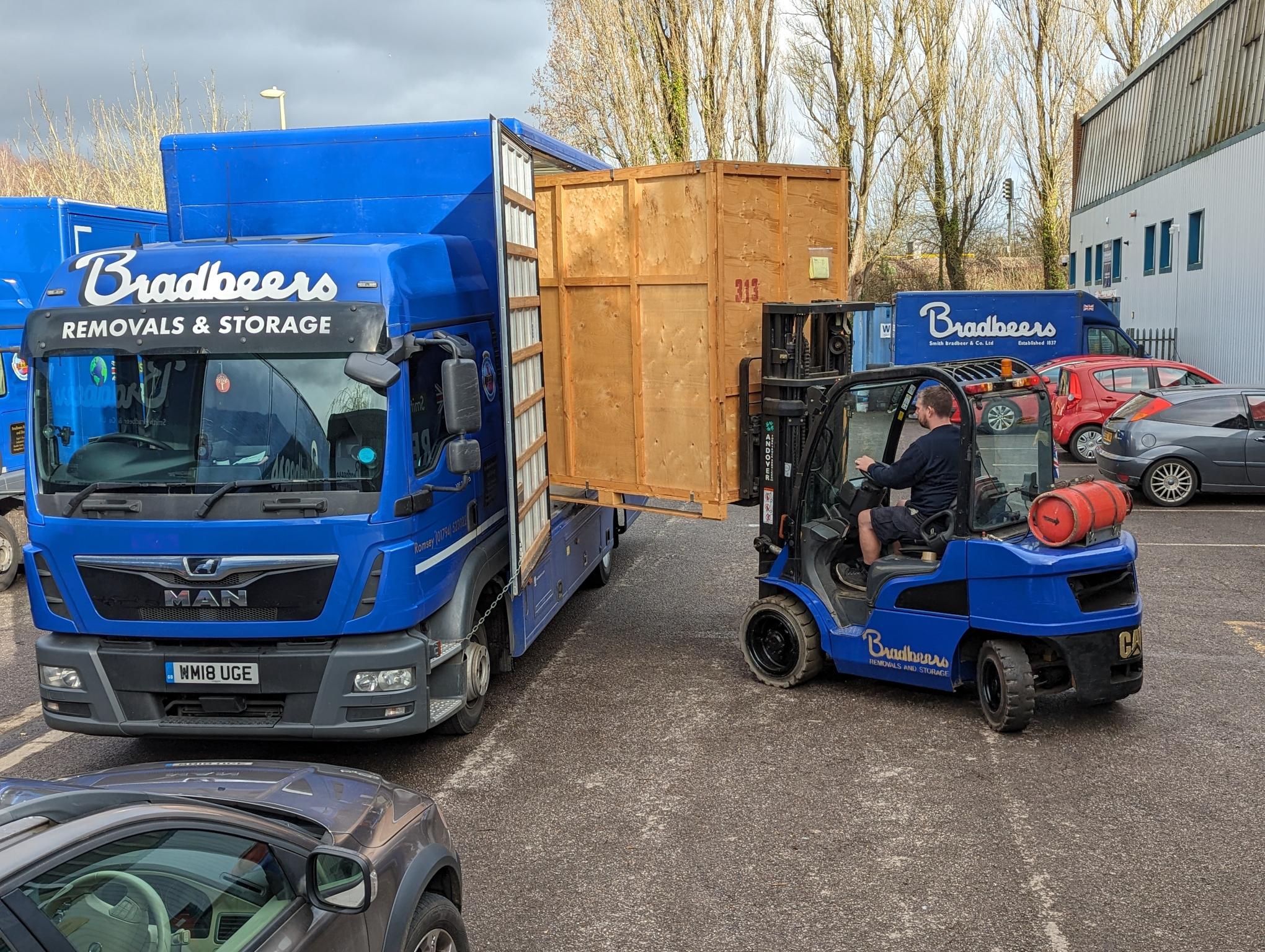
Containerised storage at our Romsey depot follows a set process. Our team loads your belongings into large wooden containers, lists every item on an inventory, then seals and stacks the containers inside our warehouse under round-the-clock CCTV. You hand it over and we look after it. Around 45% of our storage customers are using it this way between house completions.
Why does this matter for furniture? Because goods packed once, by our crew, and not touched again travel and store better than items shuffled in and out of a unit. There’s no repeated handling, no damp from an up-and-over door left open, and a clear inventory if anything ever needs checking. It’s the same care we apply to a removal, extended into storage.
Our take: Containers aren’t lock-ups. They’re sealed boxes inventoried by the same crew who moved you, stacked in a warehouse you don’t need to visit. For a houseful waiting on a completion date, that’s the lower-stress option nine times out of ten.
There’s a trade-off, and we’re upfront about it. You can’t pop in for a single box on a Saturday. Retrieval is arranged with us, usually with a little notice. If you genuinely won’t need access until the move completes, that’s no loss. If you will, read on.
For getting items ready, our guide on how to pack your belongings correctly for storage covers the basics.
How does self-storage work?
Self-storage gives you your own unit, your own padlock, and the freedom to visit during opening hours whenever you want. You decide what goes in, how it’s arranged, and when you take it out. Nationally this is a big and growing option: the UK now has 2,900-plus self-storage sites (SSA UK, 2024), reflecting how many people want that come-and-go flexibility.
When does self-storage earn its keep? When access is the whole point. Think a small business holding stock and pulling orders, a tradesperson storing tools and materials, a hobbyist with kit, or anyone in a long, uncertain in-between who needs to reach a few things regularly. You’re paying for a private space on tap, and that convenience has real value.
According to the Self Storage Association UK, the country has more than 2,900 storage sites and around 1,100 of those offer container storage (SSA UK, 2024). Both models are mainstream, which tells you neither is a niche compromise. The job is matching the model to your need, not finding the “real” option.
The catch with self-storage is that you do the work and carry the risk. You pack the unit, you stack it safely, and an unused unit you’re paying for by the square foot can quietly become expensive. Which brings us to value.
Which is more secure and better value?
For most longer stays, containerised storage works out cheaper, because you pay for the volume you actually store rather than a fixed unit footprint. Self-storage charges by floor space, so any air you rent and don’t fill is money gone. The longer the stay and the less you need access, the more containerised pulls ahead on price.
Security is comparable when both are done well, and ours is built in: items are inventoried, sealed, and held in a warehouse under continuous CCTV, with no public foot traffic around your goods. A reputable self-storage site is secure too, but more people move through it, and your unit is only as tidy and protected as you leave it. For high-value furniture and antiques, the sealed-and-inventoried route is the one we’d pick.
Wondering what storage adds to a move overall? Our removals cost guide sets storage alongside the rest of your budget.
Storage during a house move: which should you choose?
For a house move with a completion gap, containerised storage is the default we recommend. When your sale and purchase don’t land on the same day, your whole home needs holding somewhere safe and you almost never need to reach into it. That’s containerised storage’s sweet spot: load once, store sealed, deliver to the new place when you complete.
It also dovetails with the removal itself. The same crew that empties your old home loads the containers, so there’s no double handling and no second company involved. When your completion date lands, we bring it all to the new address. One team, one inventory, one point of contact.
From our Romsey team: The classic case is a chain that slips by a week. Your buyer’s ready, your purchase isn’t. Rather than scramble, we move you out, store the lot in containers, and deliver on the new date. Customers tell us removing that single worry was worth more than the storage line on the invoice.
Self-storage still has a place mid-move. If you’re decluttering to sell and want to keep clearing the house over several weekends, a unit you can drive to suits that rhythm better. Many people use it exactly this way before the main move. Our deeper dive on using storage between house moves covers the timing.
Which storage is right for you? A quick decision guide
Choose containerised storage if you’re storing a houseful, won’t need regular access, want furniture sealed and inventoried, or you’re bridging a completion gap on a move. It’s the lower-cost, lower-effort, higher-protection option for “store it and forget it until I need it back.”
Choose self-storage if access is the point: you’ll visit often, you’re running stock or tools for a business, your storage needs keep changing, or you simply prefer holding your own key. The donut below shows why most of our own customers land on containerised, though plenty have good reasons for the other.
Still unsure? That’s fine. Tell us what you’re storing and for how long, and we’ll point you to the cheaper, simpler option even if it isn’t the one you rang about.
Not sure which fits? Ask us, or just visit. You’re welcome at our Romsey warehouse without an appointment to see containerised storage for yourself. Or call 01794 523022 and we’ll talk through your move and recommend the right option, with a free survey if you’re storing a full home. [Talk to us about storage →](/[REPLACE: contact/storage page URL])
Frequently Asked Questions
What is the difference between storage and self-storage?
Containerised storage loads your goods into sealed containers that staff inventory and store for you in a warehouse, with retrieval arranged on request. Self-storage gives you your own unit and padlock to access during opening hours. The UK has 2,900-plus storage sites across both models (SSA UK, 2024).
Is containerised storage cheaper than self-storage?
For longer stays, usually yes. Containerised storage is billed by the volume you actually store, while self-storage charges for a fixed unit footprint whether you fill it or not. The gap widens the longer you store and the less you need access. For short, access-heavy stays, self-storage can compete.
Which storage is best during a house move?
Containerised storage is the usual best fit for a completion gap, because your whole home is sealed, inventoried and held safely until your new date, with no need to access it. The same crew handles the move and the storage. See our guide to the benefits of storage during a move.
Can I access my belongings in containerised storage?
Yes, but not on a whim. Retrieval is arranged with us, usually with a little notice, because your goods are sealed in containers stacked in the warehouse. If you expect to need regular access to specific items, self-storage is the better choice for that pattern.
Is my furniture safe in storage?
With containerised storage, items are professionally packed, inventoried and sealed before going into a warehouse under round-the-clock CCTV, with no repeated handling. That’s why we recommend it for furniture, antiques and high-value pieces. For prep tips, see how to pack your belongings correctly.
The bottom line on storage vs self-storage
Here’s what to hold onto:
- Containerised storage is sealed, inventoried and staff-managed: cheaper for longer stays, safest for furniture, and the default for a house move with a completion gap.
- Self-storage is your own unit on your own key: best when frequent access is the point, such as business stock or an ongoing clear-out.
- Match the model to your need, not the other way round. Volume and access decide it, not the label.
- Both are mainstream in the UK, with 2,900-plus sites nationally (SSA UK, 2024).
We run both at Romsey, so whichever fits, you’re covered by the same team that’s been moving Hampshire families for 185 years. Tell us what you’re storing and we’ll recommend the honest option.